
Intents
An intent is a key entity of the NLU service; it unifies a set of phrases, user intent and other metadata.
More about using intents in a script, intent definition and configuring activation rules
Intent creation
Open a project and click CAILA > Intents in the toolbar. You have navigated to the intents reference for the project.
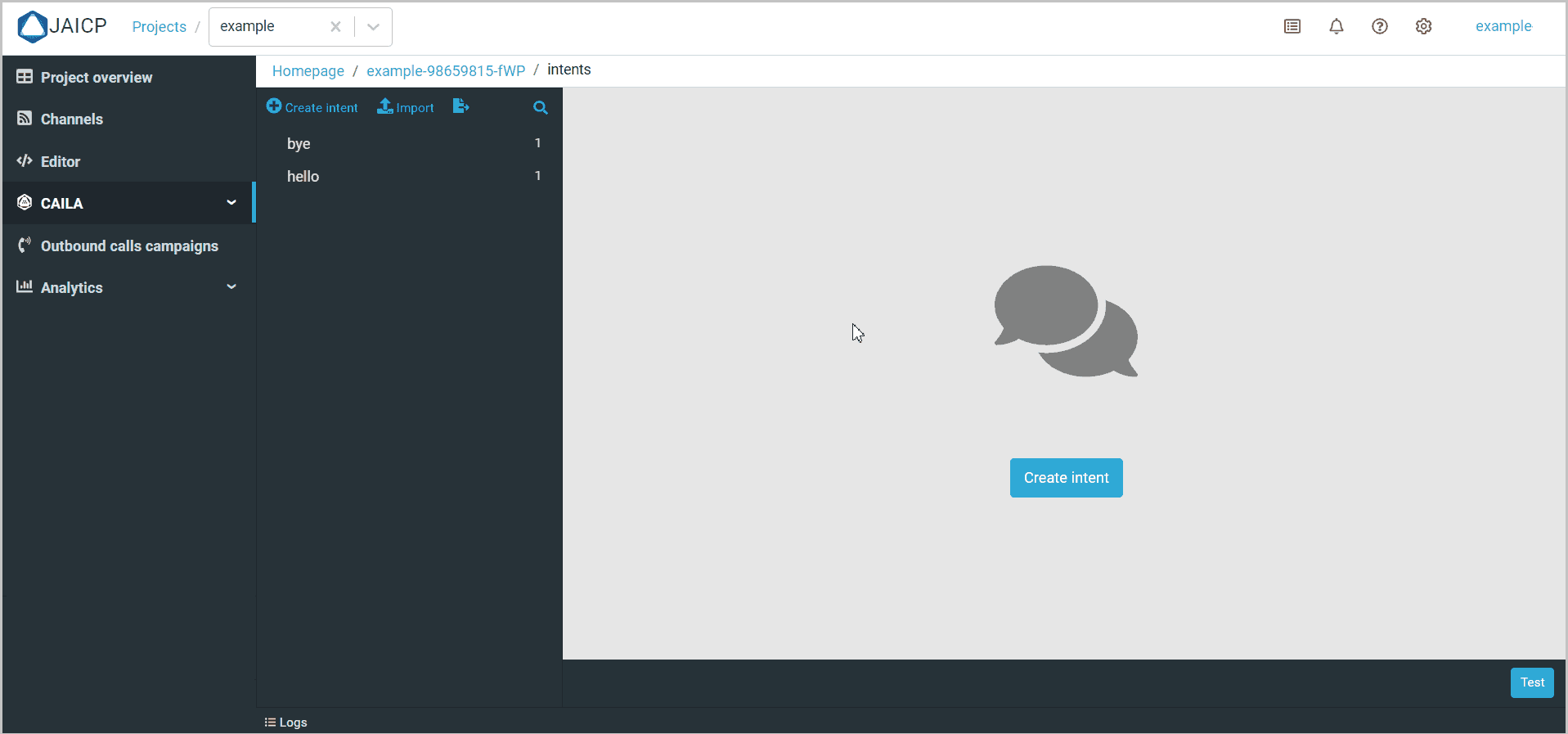
Click Create intent. Fill in the fields:
- Name — specify the intent name. The full intent path is calculated automatically and shown under the input field; it is used to reference the intent from the script.
- Description — specify an additional description or comment.
- Answer — specify the standard reply to the intent. You can reference it from the script as
$context.intent.answer. - Training phrases — specify examples of training phrases for recognizing this intent.
You can also create a nested intent. To do that click the
 icon next to the intent name > Create nested intent. The nesting depth of intents is unlimited.
ᅠᅠᅠᅠᅠᅠᅠᅠᅠᅠᅠᅠᅠ
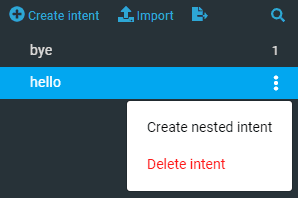
Use an nested structure to create a hierarchical structure for your intents. This will help not to get confused in their use and editing while writing the script.
Intents form a tree in the right panel. Tree nodes are sorted in dictionary order. For each node the number of example phrases in this intent is indicated along with the number of child phrases, delimited by the / character.
Filling slots for an intent
Slots are the data that the client sends with a request or when additional data are requested. Each slot has required attributes: Name, Type.
More about requesting additional data for Slot filling
To fill in the slots click Add slot. Fill in the fields:
- Name — slot name.
- Entity — from the list select the entity that defines the type of the data that will go into the slot. You can use both system and custom entities.
- Required — activate the checkbox if the respective slot is required to be filled.
- Questions — specify questions that will be used in the Slot filling process.